
Bengaluru out-of-home
Out-of-home for restaurants and hospitality in Bangalore.
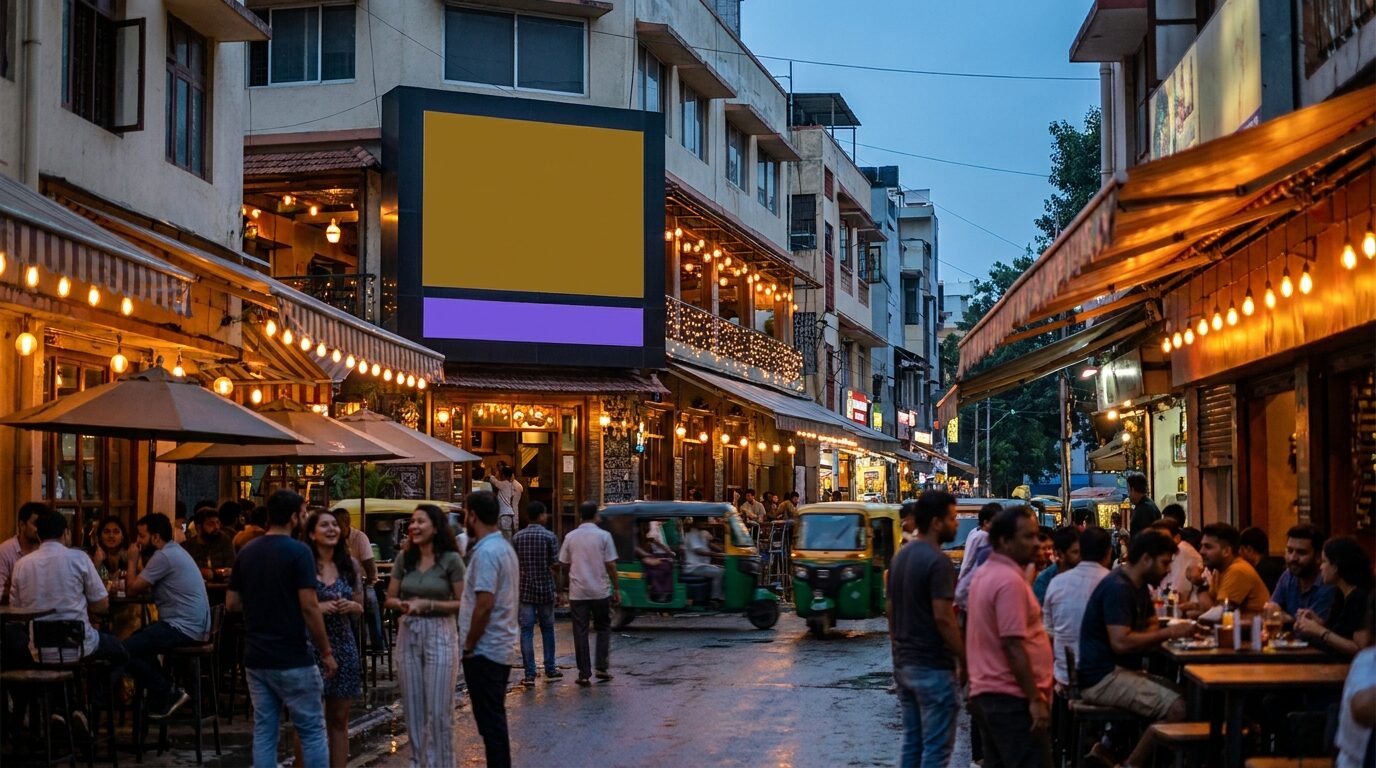
Food and hospitality live on the local catchment. Namma OOH helps you own the few kilometres around the outlet and the corridors that bring people to it.
Restaurants & Hospitality — the essentials
Updated 6/1/2026
- Primary objective
- Footfall and bookings from the local catchment
- Best-fit formats
- Digital Outdoor, Captive Screens, Billboards
- Key corridors
- The few km around each outlet; dining clusters (Indiranagar, Koramangala, MG Road)
- Typical window
- Always-on local presence + bursts around launches and seasons
- Compliance
- BBMP-permitted sites; neighbourhood-appropriate placement
- Budgeting
- Custom-quoted to the outlet catchment and duration
Why out-of-home fits restaurants and hospitality in Bangalore
Hospitality is a catchment business. Most of a restaurant’s customers come from a short radius and a handful of feeder roads, and the decision — where to eat, where to stay, where to go tonight — is often made close to the moment and close to the place. Out-of-home is the channel that lives in that radius: a screen or a well-placed hoarding in the catchment reaches people when they are nearby, hungry and choosing.
Bangalore’s dining and nightlife are concentrated in well-defined clusters, which makes the catchment easy to own. Rather than buying the whole city, a single outlet can dominate the few kilometres and the corridors that bring people to it — and a multi-outlet brand can repeat that pattern around each location. It is precise, efficient, and matched to how the decision is actually made.
The Bangalore map for hospitality
Hospitality planning is hyper-local. We build a plan around each outlet’s catchment and the clusters where dining demand concentrates.
The dining & nightlife clusters: Indiranagar, Koramangala, MG Road / CBD and Church Street concentrate eating-out demand — digital and street-level sites here reach people already in a going-out mindset.
The outlet catchment: The few kilometres around each location — feeder roads, nearby junctions and residential pockets — is where neighbourhood hoardings and community screens drive walk-ins.
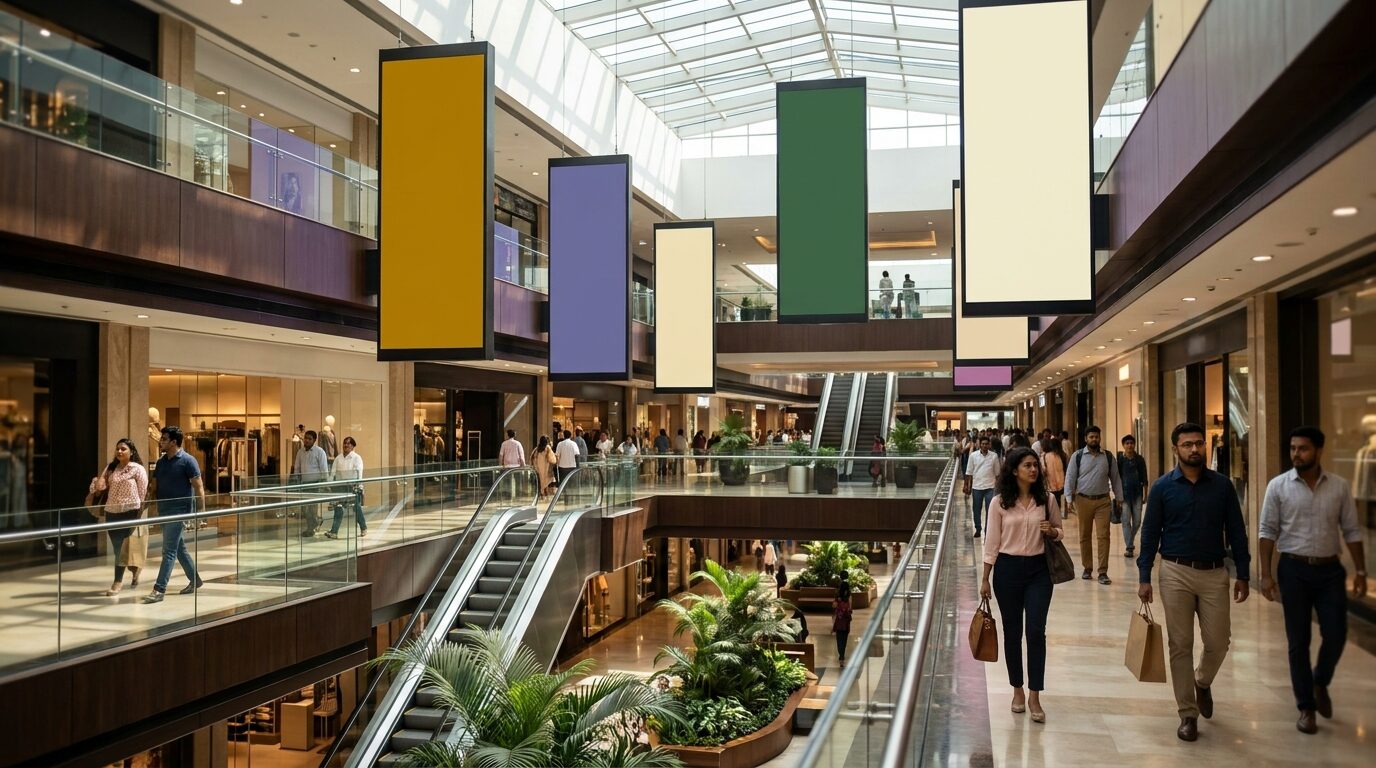
Captive, ready-to-decide audiences: Screens in malls, food courts and tech parks reach a captive audience close to the moment they choose where to eat.
Which format for which job
| Best for | Reach vs frequency | When to use | Watch-out | |
|---|---|---|---|---|
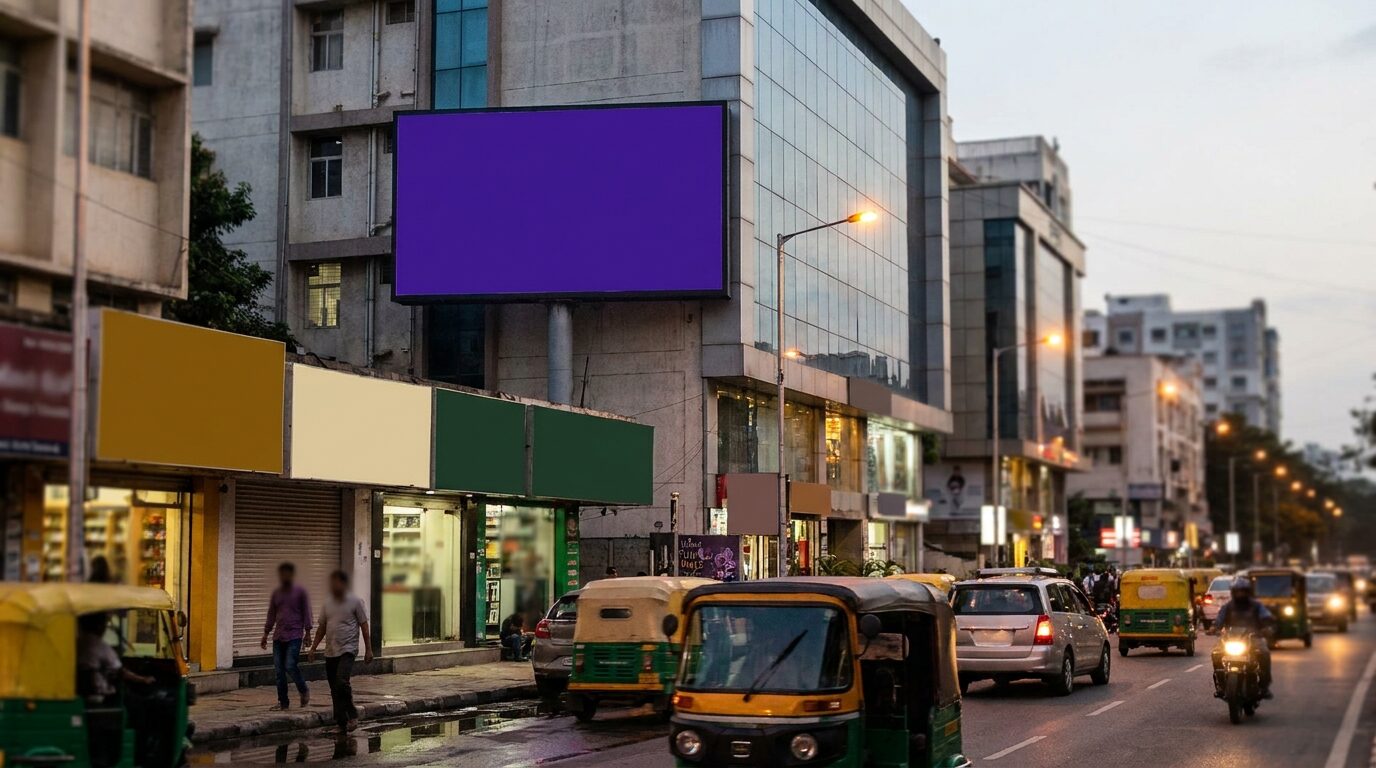
| Digital Outdoor | Daypart messages (lunch/dinner) | Frequency, local | Launches, seasons, offers | Best near the catchment, not city-wide |
| Captive Screens | Malls, food courts, communities | High frequency, captive | Near the decision moment | Operator coverage varies |
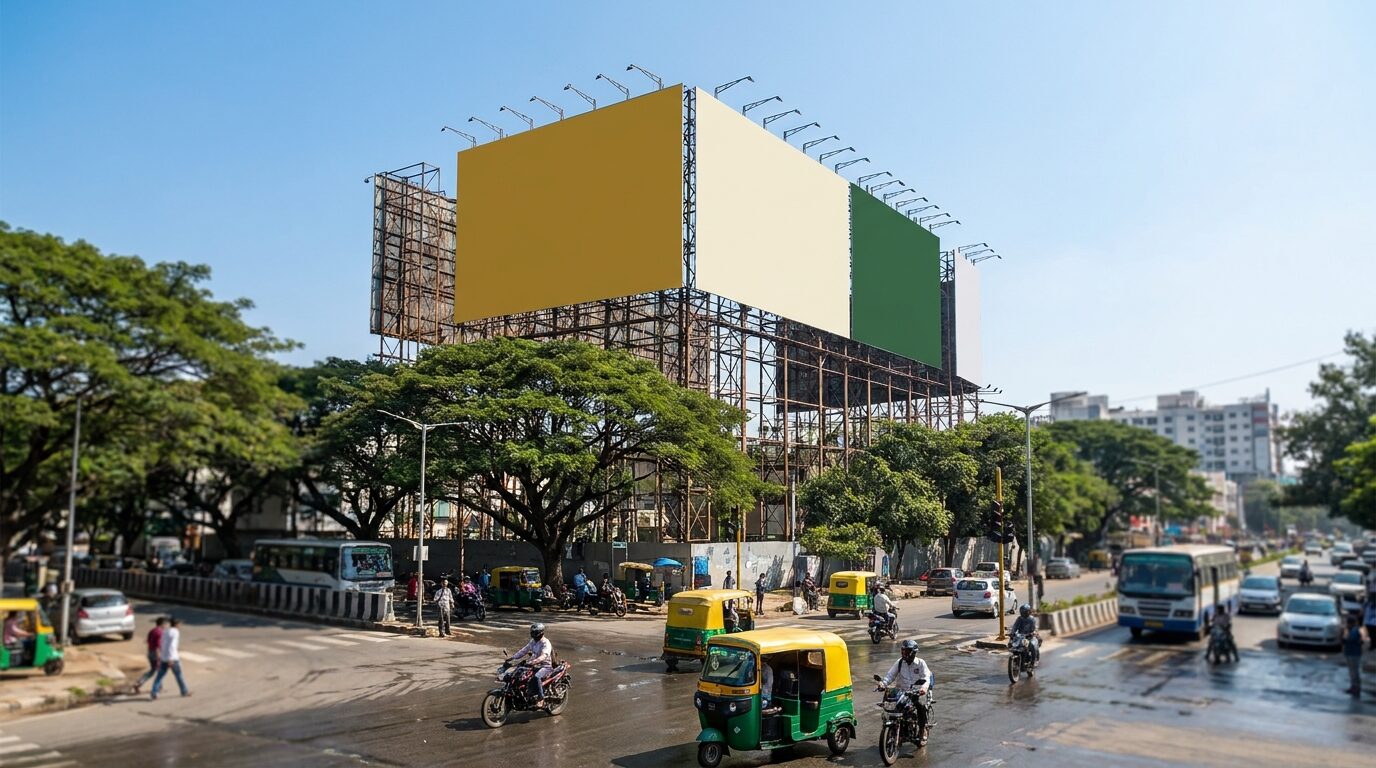
| Billboards | Landmark presence on feeder roads | Reach in the catchment | New outlet, sustained presence | Site count matters less than placement |
The formats that fit
How the Namma OOH toolkit maps to restaurants & hospitality in Bangalore.
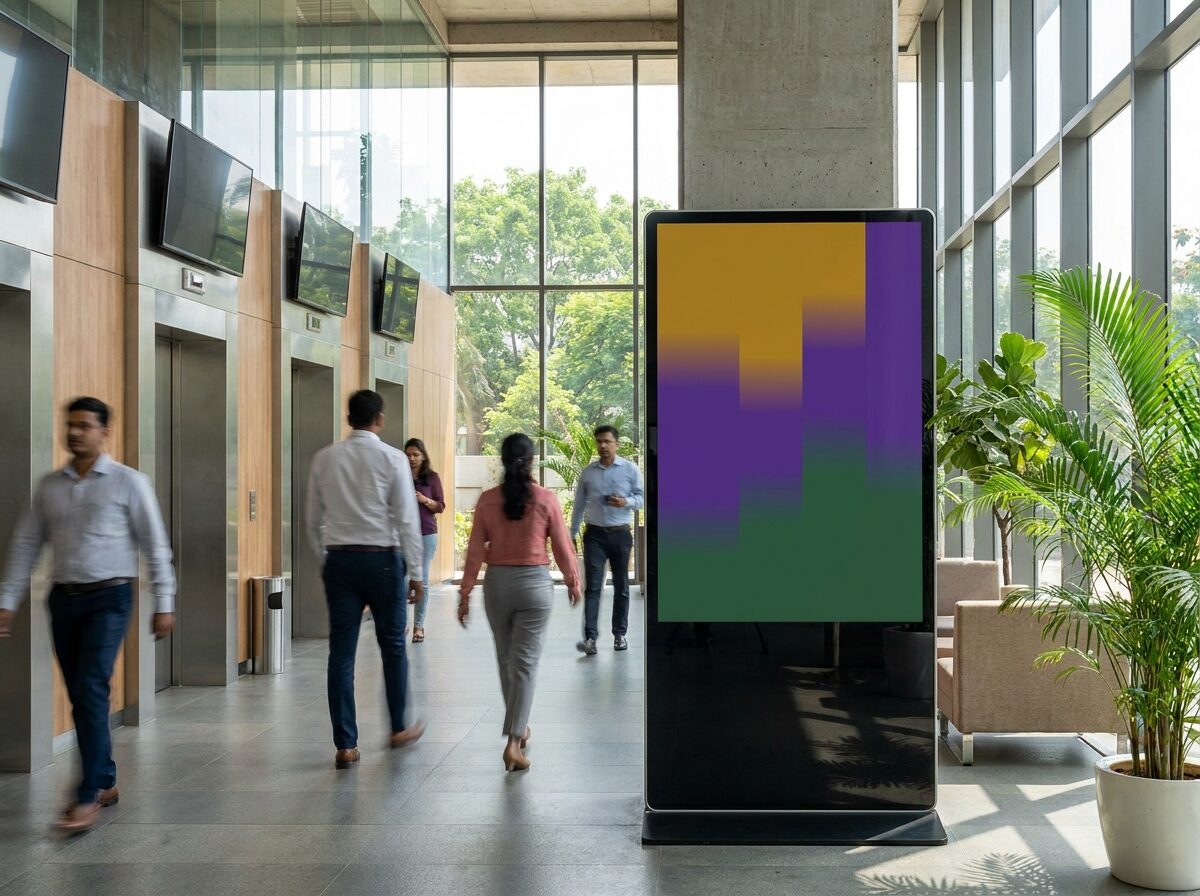
The local catchment
Hungry, nearby, ready to decide
Digital screens, neighbourhood sites, and mall and community screens reach people close to the outlet, at the moment they are choosing where to go.
How we plan a restaurants & hospitality campaign
Draw the catchment
We define the radius and feeder roads each outlet actually pulls customers from.
Own the local sites
We secure digital and street-level placements where nearby diners will see them.
Message to the moment
Dayparted creative — lunch, dinner, weekend — so the screen works hardest at the right hours.
Repeat per outlet
For multi-outlet brands we replicate the catchment plan around each location and report back.
Frequently asked questions
Own the catchment. Concentrate digital and street-level placements in the few kilometres and feeder roads around the outlet, message to the moment with dayparted creative (lunch versus dinner), and add captive screens in nearby malls or tech parks to reach a ready-to-decide audience.
Yes, when it is planned locally rather than city-wide. A single outlet does not need the whole city — it needs the few kilometres around it. A tight catchment plan keeps spend efficient and aimed at people who can realistically visit.
It scales with the size of the catchment, the number of sites and screens, and how long you run. A single-outlet plan is far smaller than a city-wide brand campaign. We size it to your outlet and budget.
For dining and nightlife the strongest clusters are Indiranagar, Koramangala, MG Road / Church Street and the high-density residential belts — but the right answer is wherever your outlet’s catchment actually is, which we map per location.
Yes. Digital out-of-home supports dayparting, so you can run a breakfast or lunch message in the day and a dinner or nightlife message in the evening, matched to when your audience is nearby and deciding.
Plan a Campaign
Tell us about your restaurants & hospitality objective and we will plan to it.